



Cleanroom, DoDEA Schools, and Child Development Center Standards:
Supporting Mission Readiness at Home and on the Front Line

BAC employee Kathy M. in a Clean Room setting at NASA KSC
In federal facility contracts, few environments carry greater responsibility than cleanrooms and Department of Defense Education Activity schools, and military child development centers. Each serves a different purpose, yet all demand absolute consistency, disciplined execution, and a deep understanding of risk. In these environments, performance is not judged by appearance, but by how reliably the facility protects people, processes, and outcomes.
For America’s active-duty service members, the connection between facilities performance and mission readiness is deeply personal. When parents in uniform report for duty, deploy, or train, they depend on systems both on base and at home that allow them to remain focused on the mission. Reliable, well-managed facilities are a quiet but critical force multiplier.
At Brevard Achievement Center (BAC), our approach to cleanrooms, DoDEA schools, and Military Child Development Centers is guided by a shared operating philosophy rooted in standardization, flexibility, and continuous improvement. While each environment presents unique risks, all require disciplined systems that anticipate problems rather than react to them.
Cleanrooms are designed to eliminate uncertainty. Every surface, process, and movement is controlled because even minor deviations can have far reaching consequences. BAC supports cleanroom environments through certified quality systems and cleanroom operations that meet ISO 14644 standards for controlled environments. Procedures are documented, repeatable, and auditable, ensuring environmental controls consistently support mission critical work. At the same time, cleanroom requirements evolve. Missions change, classifications shift, and operational agility becomes essential. Our teams are structured to adapt quickly without sacrificing compliance, control, or consistency.
DoDEA schools introduce a different but equally important set of facility demands. These learning environments must support student safety, health, and academic success while meeting stringent federal and Department of Defense standards. Schools serve children who may experience frequent relocations or parental deployments, making consistency and reliability essential. Facility performance in DoDEA schools directly impacts daily learning, staff effectiveness, and family confidence. Stable, well-maintained environments allow educators to focus on instruction and students to focus on learning.
Military Child Development Centers represent one of the most sensitive facility environments of all. These centers care for the youngest members of military families, often while parents work extended hours, deploy, or train. Facilities must protect developing immune systems, support early childhood development, and provide a sense of stability and trust for both children and parents. In this setting, consistency is not only an operational requirement. It is foundational to safety, development, and family confidence.

BAC employee Sabrina F. in a Child Development Center at PSFB
Workforce stability plays a central role across all three environments. BAC maintains high employee retention rates throughout its facility services teams, reducing one of the greatest sources of operational risk. Long-tenured employees bring deep familiarity with site specific requirements, stronger adherence to protocols, and a heightened sense of ownership. In schools and Child Development Centers, that stability also means familiar faces for students, children, and families, reinforcing trust in the environments supporting military life.
Supporting cleanrooms, DoDEA schools, and Military Child Development Centers is BAC’s use of predictive quality assurance systems. Rather than reacting to failures or inspection findings, BAC tracks performance trends, identifies early indicators of risk, and intervenes before small issues become larger problems. This proactive approach to risk mitigation protects compliance, safeguards occupants, and ensures uninterrupted operations in mission critical environments.
Innovation and continuous improvement ensure these systems remain effective over time. BAC regularly refines processes based on performance data, supervisory oversight, and frontline feedback. Standardization provides the foundation for reliability. Innovation strengthens resilience. Together, they enable operational agility without sacrificing control.
The result is more than compliance. In cleanrooms, it means environments that support precision work and protect mission critical outcomes. In DoDEA schools, it means safe, consistent learning environments that support educational continuity for military children. In Military Child Development Centers, it means healthy, dependable spaces that allow service members to focus on readiness, knowing their children are cared for in trusted environments.
This is why standards in these contracts matter. Cleanrooms, DoDEA schools, and Military Child Development Centers are proof points of an organization’s ability to manage risk, deliver consistency, and adapt without compromise. At BAC, we view these environments not as isolated requirements, but as extensions of a shared mission to protect people, support families, and deliver operational excellence where it matters most.
Because in environments where failure is not an option, quality is not just a standard.
It is a promise.




From Opportunity to Leadership: How Tory Howard Lives BAC’s Values Every Day
At BAC, our mission is carried forward not only by the services we provide, but by the people who represent us every day. Few stories reflect that more...

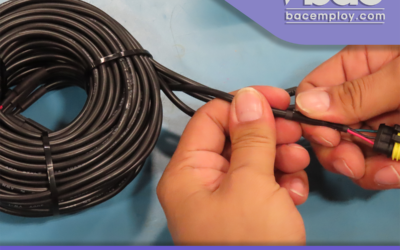
From Process to Product; Cable Assembly Done Right the First Time
From Process to Product; Cable Assembly Done Right the First TimeThe first thing you notice when you step onto the cable assembly floor at BAC is not noise or...
Why ISO 9001 & AS9100 Matter
Why ISO 9001 & AS9100 Matter By Crystal Fuller | Director of Manufacturing and Logistics | BAC Quality in manufacturing is not an aspiration. It’s a...